PODCAST
The Shiproom - Episode 1 - “Curiosity Is Now Mandatory”
Former Citrix CEO Mark Templeton on AI, Inertia, and the Future of EUC
G2 Names Nerdio a Leader Across Fall 2026 Reports for Desktop as a Service Read the blog
PODCAST
Former Citrix CEO Mark Templeton on AI, Inertia, and the Future of EUC
In the early nineties, a small company licensed the Windows NT source code from Microsoft and used it to reinvent how we work. Building the foundation for everything that we now call end user computing. That company was Citrix. And one of the CEOs who led Citrix shortly after its creation is here today to talk about the past and future of EUC in the age of AI and Windows Cloud. So welcome, Mark, to the Shiproom. Let's get started. Hi, folks. Welcome at the Shiproom, the show for people who build, manage, and rethink modern computing. I'm Christian Brinckoff, your host today. And if you're watching this on YouTube, hit subscribe now as we have a serious episode lined up for you. My guest today spent two decades at Citrix as president and CEO, the company that redefined how enterprises think about virtual apps and desktops. So I cannot be more excited. He stepped away from the helm ten years ago, and now he's in the space to reshape it with AI. I'm today joined by Mark Templeton to find out how he or what he saw coming, what surprised him, and what he thinks you see is going on from here. So hi, Mark. Welcome finally on the show. Hi, Christian. Great. Just really great to be here with you. Thanks for the privilege of doing this. For the folks that watched this episode and and don't know you, haven't seen you, can you introduce you to to the audience here? Sure. You know, I was part of the Citrix team for about twenty years. When I joined the company, there were fifty one employees. I was employee fifty two. When I joined, you know, I had been kind of a software migrant worker moving from one startup to the next to the next until something, you know, got traction. By training, I'm a product designer. I'm by accident, you know, I'm a software executive. But I've been a lifelong student of how technology works and how it changes work. When I joined Citrix, I think our trailing revenues were twelve months were fifteen million. And when I left the company twenty years later, sixteen years as CEO, we reported three point three billion in revenue. So there was a lot of growth there and a lot of experiences, some of which we're gonna talk about today. And then today, you know, I'm a board member. I'm an investor. I'm a mentor. I'm still very much hands on with technology especially AI. I consider myself to be well forever a student. I think that's an important part of being in our industry is having the sort of a childlike mind, the curiosity of a child, and and and and and also the the interest in getting your hands dirty, so to speak. So I'm still interested in the same questions. How does technology work and how's how can it change, you know, the way we work and expand human capability? Yeah. Getting your hands dirty is is the attitude for getting through this age of AI, and that alludes a little bit to the things you're gonna talk about. Like, you always have to reinvent yourself. And prior to hitting record of this podcast, we talked about it as well that right now it's even more and more important that you, yeah, reinvent and leave the the learnings you gained in the last, like, one, two decades or so to reinvent yourself and knowledge with AI. But I I also learned that you and I think you alluded to that a little bit that you were a design mayor. Like, you in college, did designing kind of was this kind of a preamble to getting into, like, the the the product building kind of sausage making kind of exercise as well? Absolutely. You know, the study of product design, the way I like to explain it in simple terms, it's sort of one half engineering and one half arts and crafts. Okay? So it teaches the discipline and the practices of design thinking, how to reframe problems and questions, and really sort of change your perspective on a problem in so many ways so that you can see it through a lot of different lenses and come up with creative solutions. When I approached you, I think a couple weeks or a month ago about, like, the new book I'm writing about you becoming a forward writer, you said immediately, I'm in. I'm gonna help you because you felt as well that the community needs keep going and you're still that member of that community. I I love that. I I wanna thank you personally for that again, for for saying yes to Boogoo will be amazing. And maybe that's a good moment to switch gears a little bit to when you joined Citrix. And as well that story you told me about, first, you were considered being the CEO, but then all of sudden, later you came in. What's that all about? Like Okay. Yeah. Well, these stories can be long, so we'll try to keep them as simple as possible. So I told you during our preparation that I'm probably the only one that successfully interviewed for the Citrix CEO role, I think three times. It might be four. Okay? So so the first time was when our first CEO, Roger Roberts, decided to retire. I was head of marketing. I had been with the company two years, and he told the board he wanted to retire. Long story short, he suggested the board that I was the internal candidate to consider. And the board said, well, let's let's see how he looks as president first, and then we'll decide whether he should be CEO. And Roger, yeah, was one of my most important mentors. Before I put my name in the hat, I went to him for advice and, you know, should I do this? I've never been CEO before. And Roger said, well, you have to talk to your family. You have to think about this and that. You have to think about the responsibilities, the travel. You know, there are a lot of things to think about. He said, I'll put your name in the hat but there's one condition. I said, what's that? He said that if you don't get the job, you won't leave the company. And I said, that's that's easy to say yes to because I don't really want the job to start with. But I'm being encouraged by the leadership team to put my name in the hat so so I'm gonna do it. So then fast forward six quarters, by the way, after I became CEO in January of nineteen ninety nine. In the June quarter of two thousand, obviously, were a public company. We missed the quarter very very seriously by a mere fifteen percent. So that was very serious, and it was a surprise to the board. And one rule of thumb is you never surprise your board. And so in July of two thousand, the board asked me to step down from CEO to SEO, senior executive officer, while they did a search for a new CEO. And and I told them that I was accountable, I was responsible, I did a number of things wrong, and that I supported their decision. But I was gonna get us out of this ditch because I drove us into it. And in ten months, you know, we saw some good candidates, etcetera. I got a phone call asking me if I was interested in having my epaulettes back and as CEO, and I and I said yes. So that was the second time I, you know, was named CEO. And then in twenty thirteen, I had a tragedy in my family and that led to a medical problem. And I had to take medical leave. And I I really was convinced that I was not gonna be able to come back. And so I encouraged the board to get out and do another search, which they did. And so in I think it was June of then twenty fourteen, they asked me if I was interested in having my job back. And I said, well, on one condition. And they said, well, what's that? And I said, only under the condition that I interview for with the whole board for as many hours as you want to interview me. And so the interview is five hours long and at the end of the interview they thanked me etcetera. I thanked them And they said they would consider it and they would let me know in due course. In a several weeks, I think it was, they called me and they asked me if I was still interested and I said yes. So there was yet another time that I was appointed CEO. So how do you like that? It's quite an strange story, but as we all know, true stories are usually the strangest. Yeah. I know. I love that. And, of course, it's a very heartwarming and sensitive kind of story as well and and some elements of that too. But I think it it really illustrates you as you lead with your heart, with your soul, and your passion, and it comes through every angle of when you're leading the company. And I think recently, we had Sam Altman got pushed out almost as well, and then he came back. I think, yeah, I think this is a perfect example of people who believe in a mission. They belong to the company, and they should not, with a number going down for a quarter or two or three, be influenced or going out or consider going out. Yeah. You know, along the way, so many people thought I was founder of the company, which I was not. And, you know I would always tell them that no I was not founder of the company but I loved the company like a founder loves their company. And because you know, that love comes from belief and that belief comes from a place where you think you're doing really doing the right things. And I did a podcast not too long ago, and I got asked one of the hardest questions I think I of of the podcast. And the the question was, in one word, how would you describe the Citrix culture? And I thought for a second and I said, caring. And cultures tend to flow from the top, and caring is probably how I would describe myself in terms of, you know, I cared about our team. I cared about our customers. I cared about our beliefs and what we were trying to do. And and when that care is that deep, it's it's very easy to do whatever it takes, you know, the the hard things that it takes to do those things and and the fun things as well. You know, there's there's way more fun than hard things. You know, people like to, you know, dwell on the hard parts, but I tend not to. I tend to be an an optimist and like to see the joyful part. I think the other next wave of innovation there is to have what you said, like a a a agentic task kind of taking over and then doing that workflow for you. And I think that's just like that adapter that that you as a company fulfill as that enterprise utility facilitator kind of solution, and it can change in the course of new innovation. But the, like, the the the way how you treat us like a company of service, like an SLA based service or cloud service is is kind of the same. You just go with, like, the needs of the company that just change in the yeah. And the innovation layer that comes in, whether it's AI or cloud SaaS or, like, all the other innovate mobile phones that we had, like, in two thousand and eight, twenty ten kind of coming in, and this is not different. The difference here is is that it's more foundational. It's more from within, and I think that's the impactful, powerful force. I think you always use the inertia kind of analogy. Right? Is that a picture in your background as well, or is that not the inertia? Yeah. It's about well, frankly, it's about something very personal, but it's a doctor Seuss lithograph. Alright? And it's called prayer for a child. But as I said earlier, you know, having a childlike mind, this expresses it. It's it's boundless. You know, it's upward and outward looking, and it's curious about what's out there. And and, you know, being curious about what's new in technology, it used to be optional. It's now mandatory. You know? And, you know, all caps mandatory. And I think, you know, the thing that I mean, from a personal perspective, you know, I've gone through the journey. I chat, you know, then using GPTs. Then I started doing a little vibe coding with a tool called Lovable. Then I moved on to Claude Code. Alright? Now I've got if I if I could pan this camera around, you know, you'd find four NVIDIA DGX Spark supercomputers over the weekend. I just got my AMD Halo developer machine. And what these machines can do are just amazing. And, you know, it used to be we said along the way, oh, these old legacy apps, no one's gonna rebuild them. You know? That's wrong now. All of a sudden it's wrong. They they can be rebuilt using AI like things like Claude Code as long as you understand what intent you have and the more clarity of intent, the better those tools will help you. And I think, you know, all these rules, all of these assumptions we've made in the past are getting, you know, blown up. And I think, you know, when you talked about inertia, you know, my definition of inertia well, first of all, it's the most powerful force in the universe, because the way I define inertia is it's about doing today what we did yesterday. And so it's a self reinforcing thing that really encourage us to not change. We don't have an incentive to change. And I think especially in business, but it's beyond business. When it comes to leadership, your job is to show people the future and give them a reason to change to violate this whole force of inertia in order to keep moving forward and up. I think before we jump into some some of the AI and and how AI is gonna reshape the EUC space, I think one thing I think is important to share, it also kind of reflects to the change to the space, the age of AI, is when you were CEO at Citrix, you were presenting, like, a town hall kind of to the whole group, like, your vision and and, like, what the company direction was, and the word belief had a very prominent story there to it. Like, can you share more there? Yeah. You you know, it was I'd like to say I was so smart, but I wasn't smart. You know, it was one of those accidental moments where you do the right thing and it just has a major impact on you. So we were having a pretty significant town hall. I think we had seven or eight hundred people in the room. Actually everyone had been there for a few days for training. So they asked me to come in the last thirty minutes whatever it was to just to speak to the group, no slides and then answer a few questions. And so I said a few words, thanked everyone of course. And it was at a time where we were pivoting the company from remote access to the virtual workplace. And this was a major pivot. We had to go from being a one trick pony, a one product to multiple products. We had to change our distribution and go to market. We had to build a professional services organization, which we did not have. We had to actually become very competent with m and a. I mean, there was a lot of change. And we communicated all those things and tried to teach all those things. So I mentioned those in summary, and I said, are there any questions? And it was very quiet in the room and a hand goes up. And a young man from Britain stands, still a very good friend. And he says, Mark, those are all great messages for the newbies that are here. But what's your message for the old timers? And, you know, I thought for a second, I have a choice. I can give some kind of a politically correct answer that makes the old timers feel good about where we've been or whatever. Alright? Or I can just really tell the truth or really lead as it turns out. And I said, well, my message to the old timers is exactly the same as the newbies with one exception. You gotta believe. You gotta believe we can do it. You gotta believe in the leadership. You gotta believe in the value of doing it. And you gotta believe that it's gonna be fun to do. And if you don't believe, it's totally okay. But if you don't, you've got to leave. Christian, it was a crickets pin drop silence moment for a it seemed forever, but it was actually only a split second probably. And I got my first standing ovation. And I thought wow. To lead, yes lead from the front but what does that mean? You lead with truth. You lead with clarity. You lead with, you know, going to a better place and why and make it okay if if people don't wanna join, but then go somewhere else where you can believe. Because everyone deserves an experience working on a mission and for a company that they believe in. I mean, it's it's it's almost that simple. So wherever you happen to be, if you don't believe, even if you're listening to this podcast, please leave, you know. Go find something you believe in. How can Nerio transform from right now, AVD, Windows three sixty five, orchestration of Intune, to being as well an AI governance orchestrator for anything related to future day and be that kind of solution that helps to, you know, get you there. Because AI is great. It's amazing. But the way to get there or to stitch all these different ways of using it together, I think that's a massive opportunity in front of us where AI becomes a solution Yeah. To actually pull something. Right? Yeah. Well, I'm I'm sure you guys are doing, you know, a huge amount of work, you know, inside the product, but also, you know, in the the context of the product in a world of AI where, you know, governance and, you know, compliance and all of these things are, you know, essential. I mean, security as a whole, you know, space that we haven't even begun to see the the issues. I'm starting to see some of it in my email by the way. You know? I I'm beginning these emails from people I haven't I don't know who they are. Okay? I go on LinkedIn to see if they exist. They don't exist. And they're trying to share photos with me through a link. Okay? Yeah. I send them to junk, block them, know. But so mimic mimicry is is a piece of it. You know, by the way, one of the things that anyone on the podcast that's interested, this whole AI thing has gotten to be so consumptive to me in terms of curiosity, interest, you know, the things we talked about earlier. And, you know, I'm touching enough of it in my companies that I'm working with. And I'm going, you know, how do you explain all of this? Right? I mean, you know, there's gotta be a way to explain all of this. So so, you know, I grew up coming into Citrix. And in Citrix in kind of the networking and communications world where the OSI model was the governing thing. You know I mean it's the OSI model, right? And it explained how a communication stack work. And you know when we we would talk about application networking we would talk about layer four through seven networking you know and that's different from you know layer zero, two, three, know? And and some of the four. Okay? Where it overlapped. And and that model has been very durable over a long time. So I have spent, you know, let's just say thousands of dollars working on a project to bring the OS an an OSI like model to AI. Alright? It's on version dot six. I've presented it to the the AgenTic Foundation because I want them to take it over. Because I'm, you know, I'm maybe techy enough to see the problem to, you know, kinda shape it, but not I don't have the creds to actually be the publisher of it. But anyone who's interested in it, I'll share with I'll share it with you. Alright? And and and you can share it with anyone you'd like. But it does, you know, kinda lay all this out. It has a few lenses on it including the CIO lens, the CTO the CSO lens, the CEO lens. In other words, you know, just trying to make sure it all ticks and ties from all of these angles of observation. That you kind of get a preread of the of the room kind of. Right? How would you compare the opportunity in this market that Nerdio has to, like, what Citrix had back in the days when there was no virtualization out there? I'd say it's very similar at a minimum because what you're doing is you're you're running on top of a platform or set of platforms and making them more consumable, more autonomous, more reliable. You know, there's a whole set of things, you know, easier to set up. You know, I'm sure we haven't seen anything yet or when it comes to autonomousness, know, generally in software. Alright? But especially infrastructure. And so I I think that your your opportunity at Nerdio is huge. Huge. Hey, Mark. Do you have any final messages for IT professionals or builders listening right now that are looking for something career wise AI? Yeah. Participating in a hands on way is not optional unless you are happy to, you know go reasonably irrelevant which is perfectly okay by the way. That's a legitimate decision you can make. I mean look sometimes I get so sick of a news and the garbage on the news I just say I'm gonna turn it off. It's like soap operas. You can stop watching a soap opera for a year, turn it back on and nothing has changed. Okay? I think you can make that decision but don't do it. Know? AI is gonna influence everything in your life whether directly or indirectly. Your children, your grandchildren, they they're all gonna really look to you, alright, for guidance and help. And you wanna be able to do that. And I think that that means making sure you get your hands dirty on it. You know, get your hands into it, not just casually, but, you know, a little bit more than just casually. And and then the other words, wisdom I would give is young people, they'll they that's easy for them to become disillusioned at this point in time thinking, oh, there won't be any jobs. It's like don't let that happen. Know? They'll be way worse off not learning AI than learning it even if there is some you know job issue. Alright? But secondly you know, the way the world is going is more and more towards skilled trades. Okay? And when people when when when we talk about that, Christian, people think that we're talking about being a roofer or a plumber or an electrician or no. It's like, I studied product design. That's a skilled trade. I studied business. That's a skilled trade. You study computer science. That's a skilled trade. So p p you know, and and it's guys like you and me and those listening to the podcast. You know, it's really up to us to get that message out because all you know, there is my grandfather who's an immigrant from Italy. He was a carpenter. He he said to me at a young age, he he told me and taught me that there's no shame in any work whatsoever. Doesn't matter what it is. Alright? So, you know, encourage young people to get AI literate, get into it, and go with it. Don't fight it. Go with it. I love it. We started with get your hands dirty with AI, and we ended it with get your hands dirty with AI. So our message is start right now and do whatever you can to, yeah, do the things you did in the past faster, as well as the people around you. Embrace them, as well as, yeah, help them if they are struggling with finding the right tools for them as well. Yes. Hey, Mark. Thank you for being on The Shiproom, the first episode. This one definitely goes in the archive as probably the the the best one. So bar is high for the next guest to come here. So so thank you for being here, and I hope to see you back in, let's say, a couple months to a little bit more. Let's just keep it on the calendar here. Yeah. Let let's let's do. And please keep me posted on Nerdio as you're able to talk about, you know, what you're up to and so forth. I'll I'll keep my eye on LinkedIn to see, you know, kind of your progress and how your your your trajectory is looking. So so please feel free to do that as well. Okay? Yeah. We will definitely do that. And Alright. Thank thank you as well for for watching as a guest, and hope to see you at the next episode. Thank you. Sounds great. Sounds great. Thank you.
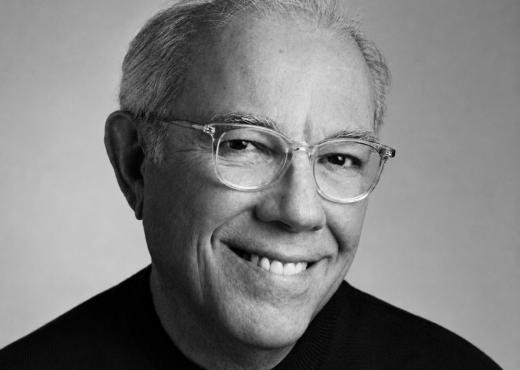
In this episode, Mark Templeton, Former CEO of Citrix, shares insights on the evolution of EUC, the impact of AI, and how leaders can adapt to rapid technological change. Discover how belief, curiosity, and hands-on learning are key to thriving in the age of AI.